6 Days
1-15
English, Swahili
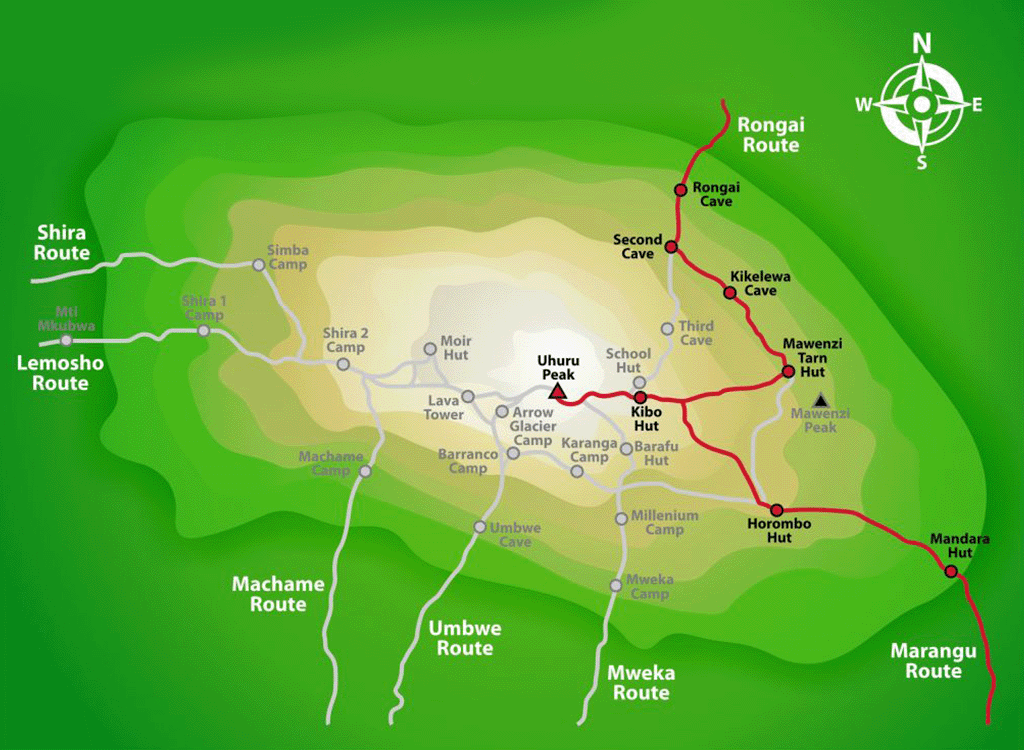
Rongai route ascends Mount Kilimanjaro from the north-eastern side of the mountain, along the border between Tanzania and Kenya. The Rongai route retains a sense of unspoiled wilderness. The Rongai route is the only route that approaches Kilimanjaro from the north. Rongai route is truly one of the more remote and wild trails on the entire mountain. Despite that however, this route offers trekkers plenty of advantages, making it a very appealing option for those looking for a unique experience on Africa’s tallest peak. Rongai route approaches Mount Kilimanjaro with a slow, steady climb, giving hikers a chance to acclimatize at a steady rate. This not only makes it one of the easier routes up the mountain, it also increases the success rate substantially. Because the Rongai Route starts on the north side of the mountain, not far from the border with Kenya, it is also the driest route on Kilimanjaro as well.
Highlights.
With a gradual ascent through pine and maize fields, Expect wildlife like colobus monkeys. Your adventure begins when your guide picks you up at your hotel and drives you for about two hours to the Rongai Gate. You then start this exciting adventure ascending through beautiful lush forests filled with diverse animal sounds. After a lunch break, you continue until the first camp on the Rongai route, which is on the less forested north side of the mountain. This quieter route gives you plenty of chances to spot different kinds of wildlife.
This day starts with an early breakfast and then departure from Simba Camp to the second high-altitude camp: Kikilewa Camp (3,630 m /11,906 f). From Kikilewa Camp you can see Kibo Volcano at its finest, if the weather is clear. This trek is more physically demanding than the previous one, so once you have reached the camp, we recommend getting some rest.
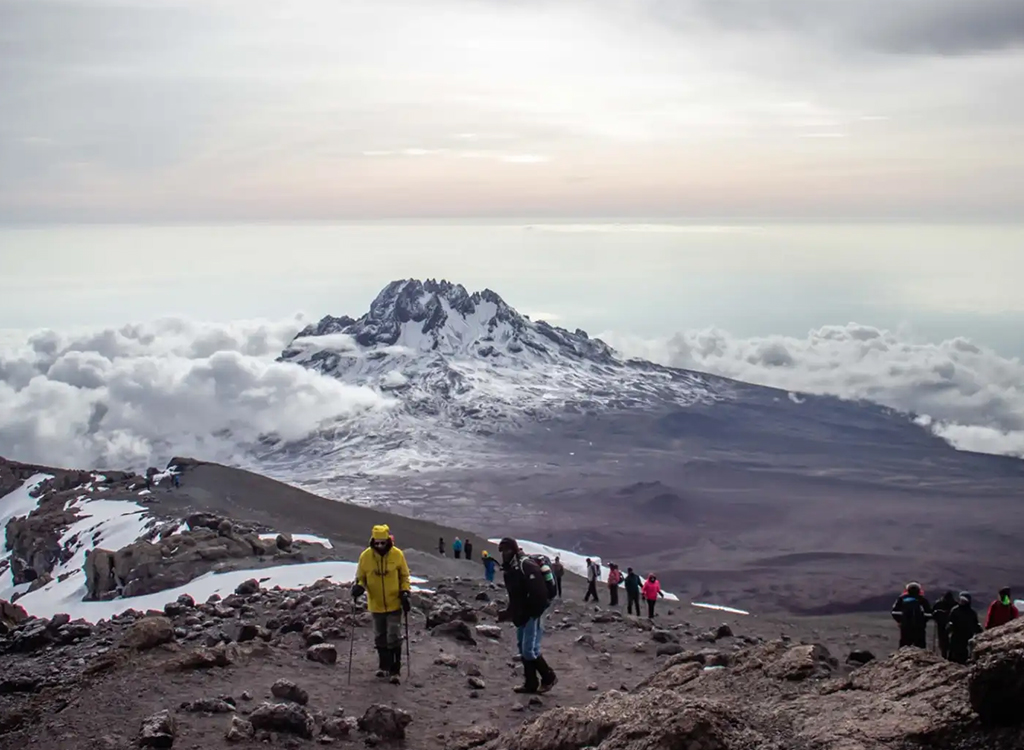
Today, you can admire some breathtaking views as you continue your route through this steep hike. You walk for about 4-5 hours in the morning, to keep the afternoon and evening to rest and to give your body a chance to adapt to the altitude. You go until Mawenzi Tarn, where you spend the night. It is just below the Mawenzi summit, with amazing views of both Kilimanjaro peaks, Mawenzi and Kibo.
You will now find yourself walking through the almost lunar landscape that is known as ‘The Saddle’ and links Mawenzi and Kibo. On arrival at Kibo Huts, located at the foot of the Kibo crater wall, it is time to ready your equipment and warm clothes for the next day’s trek to the peak. Make sure to store your drinking water in a Thermos to prevent it freezing solid. Then spend the rest of the day relaxing and go to bed early to ensure your ‘human batteries’ are fully charged for Kilimanjaro’s ultimate challenge.
Rise and shine! It will be dark and very cold when you enter the darkness on the way to the top. A row of headlights in front of you will show the way. Take it slow and listen to your guide. The ground will be frozen and you will get very tired, but keep going. After about seven hours you will be standing on the crater’s rim – Gillman’s Point (5685 m). Warming up in the sun, it is just an hour or two to reach Uhuru peak at 5 895m. You will be standing on the highest mountain in Africa! The return path is almost the same, but now the ground is defrosted and it will be dusty. It will be late morning when you arrive at the Kibo Hut. Here you will rest for an hour and have a hot meal. Onwards! The descent continues to Horombo Hut where you will rest for the night.
Today is the last day on the mountain. The descent to Marangu Gate will take about six hours. Here, the crew will say farewell and the transfer driver will be waiting. At Sal Salinero Hotel, cold drinks will be waiting too. No doubt you will enjoy a shower and a swim before sitting down for supper to celebrate your adventure.
Additional information
Things to bear in mind:

About
We are a team of adventure enthusiasts who love everything about Tanzania. Our team arrived here in 2022, and we were immediately fascinated by this land. Read More…
Copyright © 2025 All Right Reserved Asili Safaris
WhatsApp Us