1 Hour
5,895 Meters
Discover Offbeat places
Lodges & Camps Nearby
English, Swahili
The world’s tallest free-standing mountain and Africa’s snow-capped icon—a dormant volcano where glaciers glint above the clouds. Kilimanjaro national park is a true definition of East African beauty. This park shelters Africa’s highest point Mount Kilimanjaro, a very popular creation that holds quite a strong prole. Mount Kilimanjaro, along with its three volcanic cones “Mawenzi, Kibo and Shira route. Climbing Kilimanjaro is the experience of a lifetime. Mount Kilimanjaro is the highest mountain in Africa at a staggering 5,895 meters (19,341”), and the world’s highest free-standing mountain. Though many of the mountain’s routes are not for the faint-hearted, with an experienced guide at your side, you certainly don’t need to be an experienced climber to reach its summit. The Volcanic Activities in this Mountain took place long time ago making this mountain to be termed as the “Dormant” volcanic mountain due to the volcanic activities not to be spotted for a long time.
This wonder Mountain is found in near a town called Moshi. It spans up to approximately 650 square kilometers and is currently under the administration of Tanzania National Park Authority (TANAPA). Besides the daring climbing adventures that take place in the park each year, Mount Kilimanjaro National Park turns out to be a great wildlife viewing destination too and boasts in various species of fauna. Several species of wildlife can be found in the Kilimanjaro National Park, and some of these include the Cape Bu‑aloes that mainly inhabit the montane forests, grasslands, and moorland occasionally. The African Bush Elephant can be sighted in between the Tarakai and Namwai Rivers but occasionally wander around higher elevations as well. Grey duikers, Tree hyrax, and various rodents are so popular above the timberline whereas leopards, blue monkeys, and other animals occupy the montane forests. This safari park is one of the best safari destinations in Africa, a fact you will clearly see when you visit. This travel portal highlights all the essential information you will need to plan a safe and superb holiday in Mount Kilimanjaro National Park.
Cultivation Zone.
Elevation: 2,600 feet to 6,000 feet (800m – 1,800m).
On your way to Kilimanjaro’s gates, you will drive through this zone and be able to view these farms and villages. Many of the porters, cooks, and guides live in these villages with their families.
The cultivation zone receives the most rainfall annually. This zone also contains many rivers which are fed by the glacial melt from the top of Mount Kilimanjaro. These conditions mean this land is great for farming. Many small villages live on this land and cultivate: co‑ee, avocados, mangos, and bananas.
Rainforest Zone.
Elevation: 6,000 feet to 9,000 feet (1,800m – 2,800m).
No matter which routes you choose with Asili Safaris, your first day of hiking will take you through the rainforest zone of Mount Kilimanjaro. Be prepared with waterproof clothing as this zone is predictably wet. The mild temperatures of the rainforest make this portion of the hike enjoyable. You will travel through thick, rich forests which contain every shade of green imaginable. The density of the tree canopy means catching a glimpse of the sky is rare. What isn’t rare is an animal sighting, out of all the zones, you are most likely to catch a glimpse of wildlife while in the rainforest zone. Be on the lookout for blue monkeys and Colobus monkeys.
Heather and Moorland Zone..
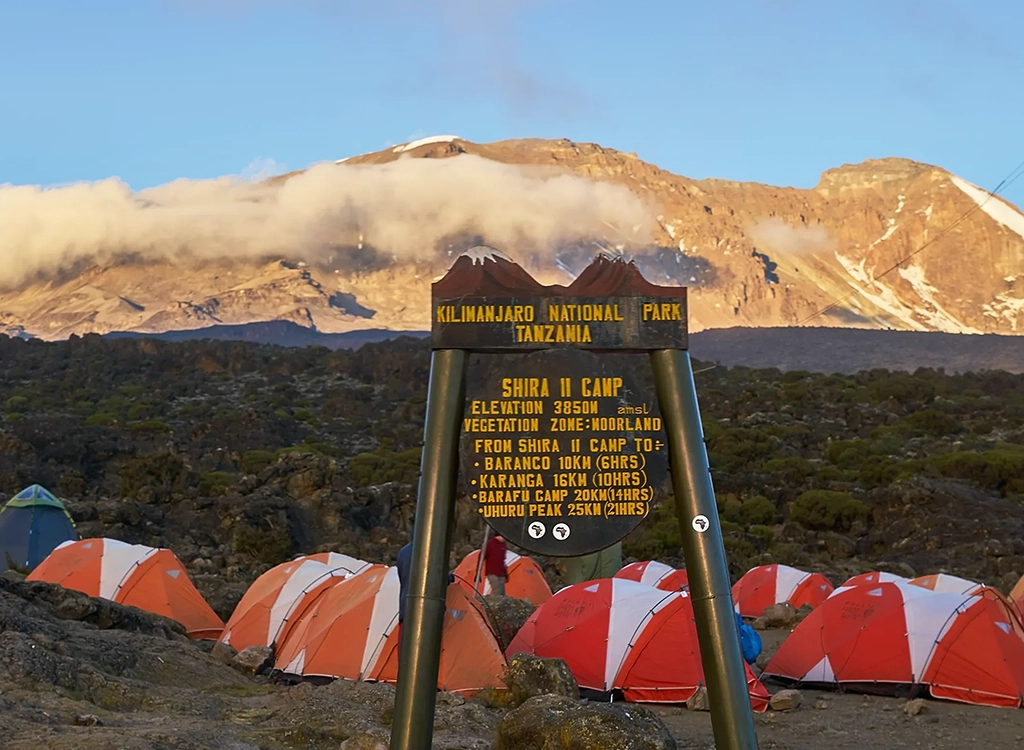
Elevation: 9,000 feet to 13,000 feet (2,800m – 4,000m).
Your second day on the mountain will take you through the Heather and Moorland zone of Mount Kilimanjaro. The rainforest gives way to the heather and moorland zone quickly as you ascend the mountain, you will see tall heather shrubs as you leave the rainforest behind.
The temperatures of this zone can be unpredictable, dependent on the time of year, the day time temperatures can rise above 100°F and at night time can drop to 32°F.
As you continue to ascend through this zone, the huge heather shrubs will give way to tall, green and yellow grasses which make up the Moorland portion of this zone. As you enter the Moorland zone of Mount Kilimanjaro, you are reaching an elevation where you will start to pass above the clouds. From here until the peak, you will have spectacular views of the bright blue sky and a wide-open view of the stars in the sky at night time.
Alpine Desert Zone.
Elevation: 13,000 feet to 16,000 feet (4,000m – 5,000m).
Your hike continues into the Alpine Desert zone – you will quickly understand why the term ‘desert’ is an apt name for this climate zone.
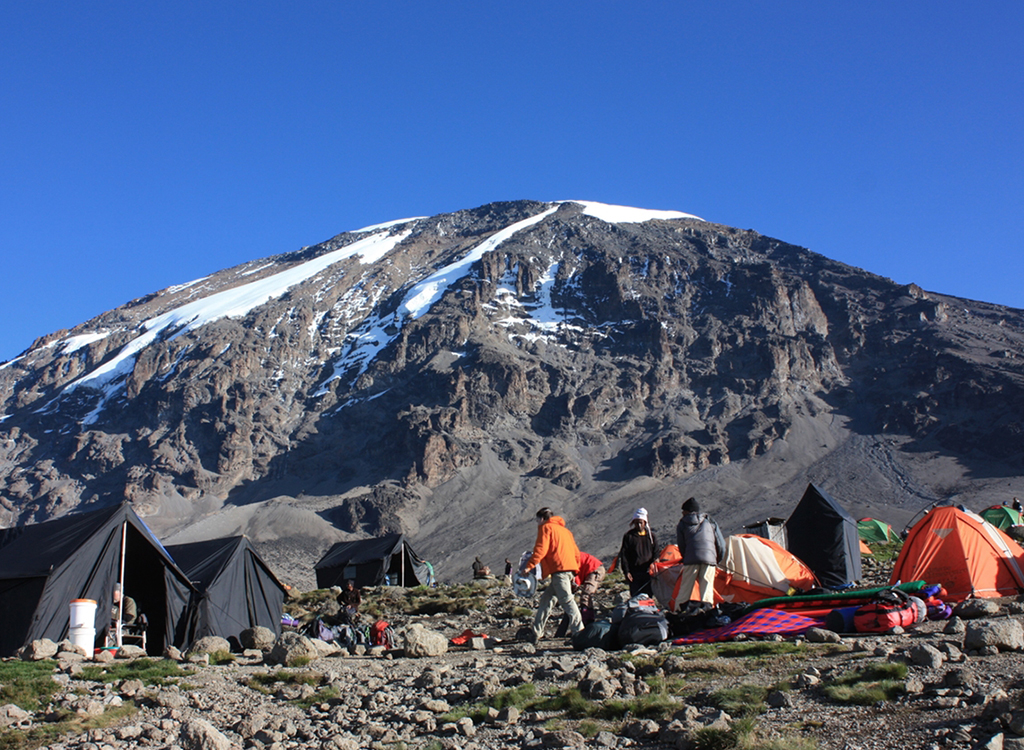
The plant life, compared to other zones, is minimal and under stability so. Any plants living here have to subsist through subzero temperatures at night and harsh sunshine during the day. Volcanic rocks in all shapes and sizes fill this zone – showing Kilimanjaro’s active past.
While in the Alpine Desert Zone, you are close enough to the peak of Kibo to view its glaciers and steep ledges. Make sure to pack warm clothing for this portion of the hike, temperatures are known to drop down well below freezing.
Arctic Zone.
Elevation: 16,000 feet to 19,340 feet (5,000m – 5,895m).
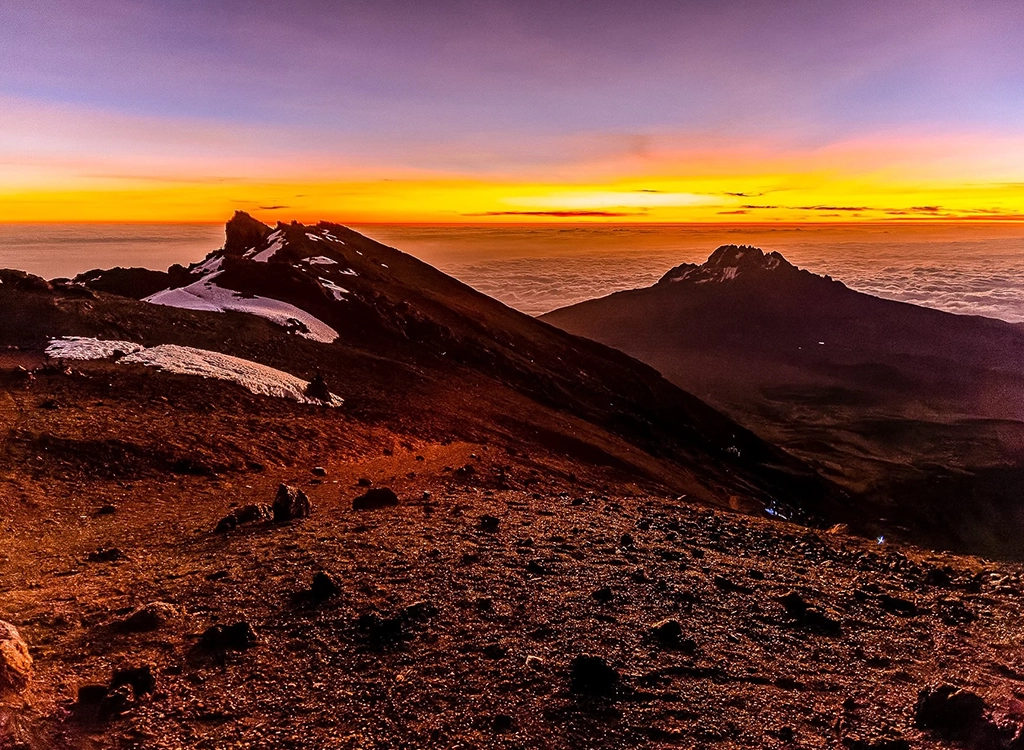
The final zone of Mount Kilimanjaro is a brutal one – you will attempt this zone on your final push to the top of Mount Kilimanjaro. You will start at base camp (either Barafu Camp or Kibo Hut Camp) and during the night you will attempt to summit the Roof of Africa.
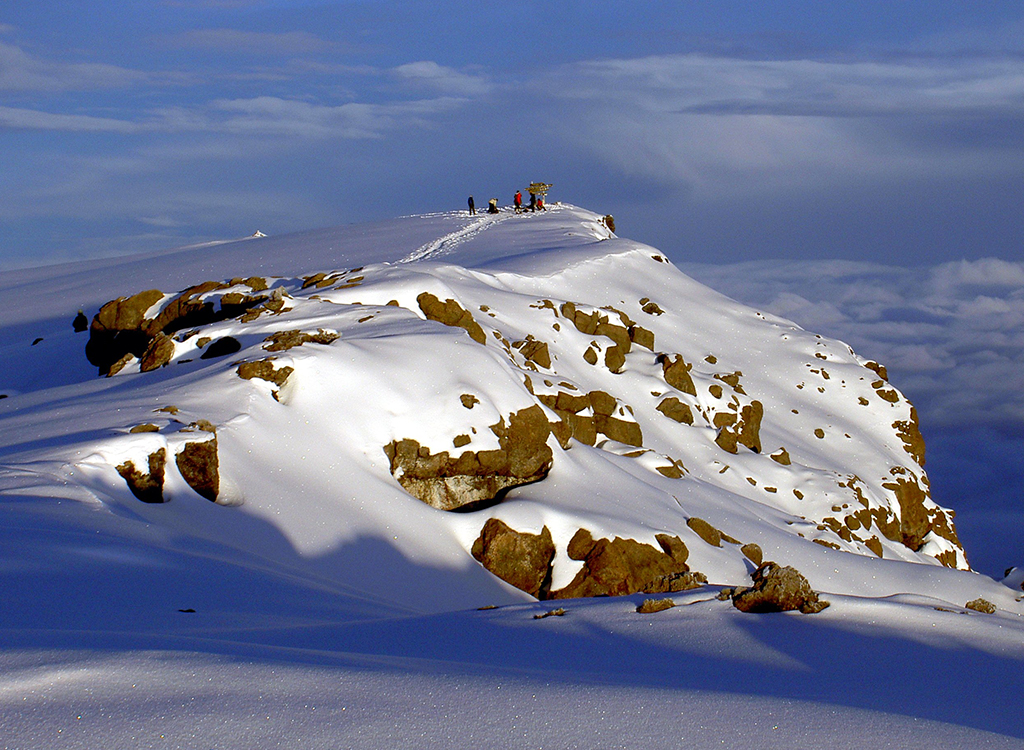
You will climb through slopes of scree, which is loose dirt and gravel, to reach Uhuru Peak. One of the benefits of climbing at night is that the frost helps to meld the scree together. This forms a better footing base for you the climb upon. You follow the switchback trail up to the rim of Mount Kilimanjaro (either reaching Stella Point or Gilman’s Point) before making your final push to Uhuru Peak. Upon reaching your goal, you will see the sign for Uhuru Peak where you can stop to take pictures and commemorate your accomplishment. This zone is known for being bitterly cold and open to all environmental factors. Wear warm, weather proof items of clothing to fight the elements – hand warmers are also a great idea if you are using hiking poles.

About
We are a team of adventure enthusiasts who love everything about Tanzania. Our team arrived here in 2022, and we were immediately fascinated by this land. Read More…
Copyright © 2026 All Right Reserved Asili Safaris
WhatsApp Us