8 Days
1-15
English, Swahili
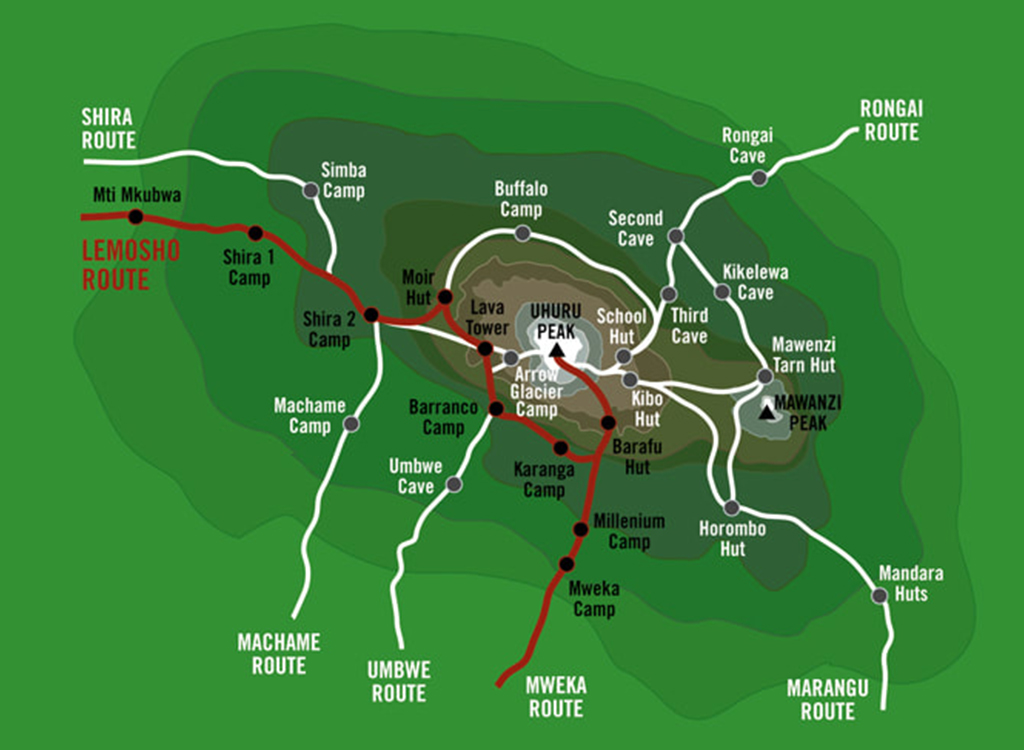
The Lemosho route is a popular, scenic, and moderately challenging trail on Mount Kilimanjaro, known for its beautiful scenery and good acclimatization prole. It starts on the western side of the mountain and typically takes 8-10 days to complete, offering a longer acclimatization period than some other routes.
The Lemosho route is a popular, scenic, and moderately challenging trail on Mount Kilimanjaro, known for its beautiful scenery and good acclimatization prole. It starts on the western side of the mountain and typically takes 8-10 days to complete, offering a longer acclimatization period than some other routes.
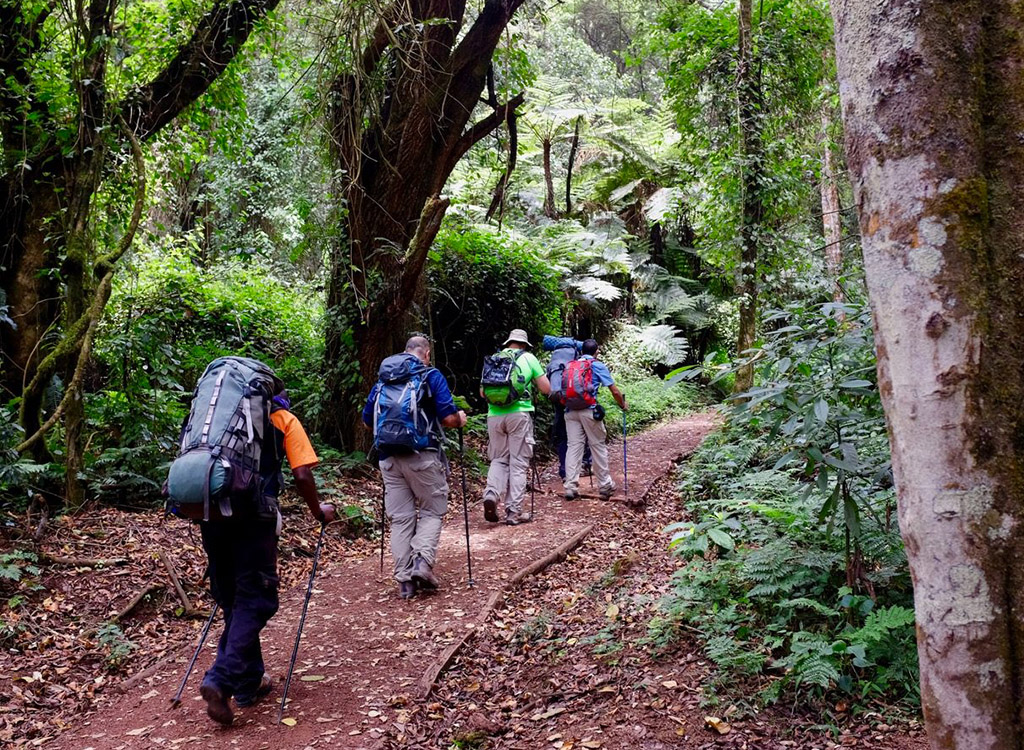
We will make our way to the Londorosi gate on the Western side of Mt. Kilimanjaro (a few hours’ drive from Arusha). We will begin our hike at the Lemosho trail head. Please note that in rainy/muddy conditions, sometimes the vehicles can’t make it to the true trailhead so, there can be some extra hiking. Your large bag must weigh less than 30 lbs, this is a requirement that the Mount Kilimanjaro Porters Society has outlined to protect porters from carrying too heavy of loads up the mountain. You will carry a daypack which should contain: snacks, water, sunscreen, and any other daily needs. Once your bags are loaded, you will drive from Moshi town to Londorossi Gate, which takes 4 hours. After a picnic lunch, we will hike for about 4 hours to the forest camp. In the forest, exotic moss and flowers delight the eye while bird calls entertain the ear. You may see Black and White Colobus monkeys as well as signs of the elephants that travel in this area. We will camp and spend an overnight at Forest Camp.
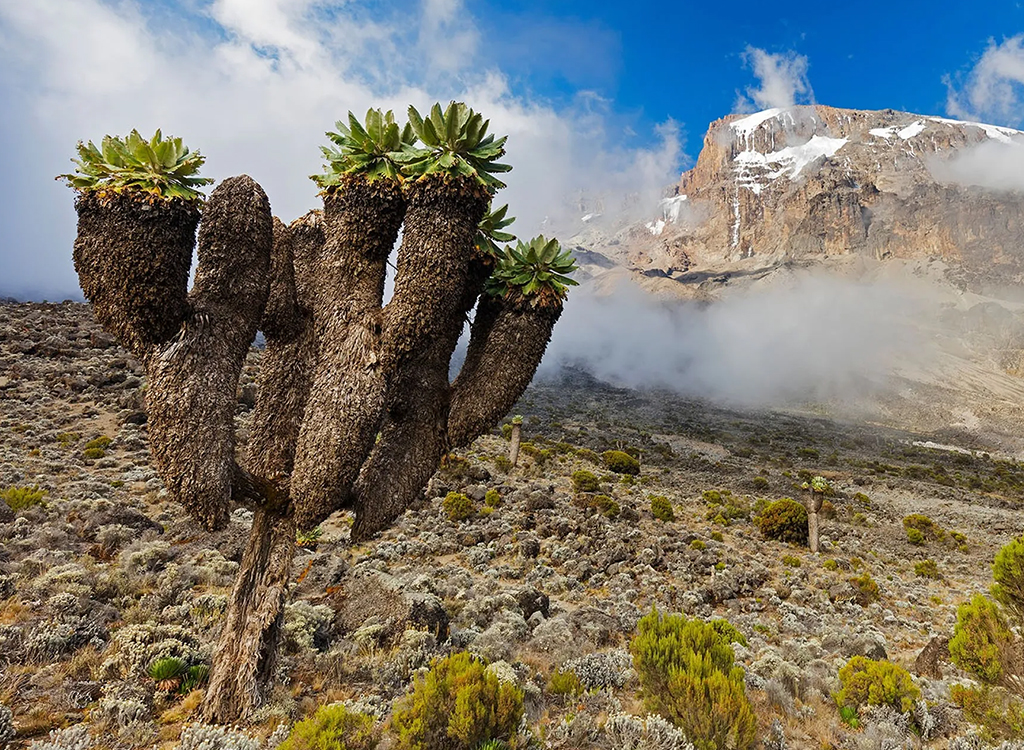
Breakfast is served early in your mess tent. Make sure to eat heartily in the first few camps. As the elevation increases throughout this trip, your appetite may be suppressed in the later days. It is highly recommended that you bring some of your own favorite snacks from home for this trip, to supplement all the calories you burn while hiking. As we leave the Montane Forest and enter the Hagenia zone, our views open and we will catch our first views of the Kibo peak. This is a good acclimatization hike, as we go up and down several ridges along the way to our highest point of the day at 11,500’ before descending to camp. Overnight at Shira 1 Camp. You will cross the Shira ridge and then slowly descend into the Shira 1 camp which is located by a stream on the Shira plateau. This is the stream which your porters get water from. They boil it and purify the water to use for cooking meals and for refilling your day pack.
Today’s hike is a gentle walk through the moorland with its tall grasses and volcanic rocks. You will then cross a plateau to reach Shira 2 camp. This day is best used for acclimatization. To best acclimatize, there are a variety of walks available to do in the afternoon near the plateau. Talk with your guide to hear about all of your options.
This day follows the “climb high, sleep low” strategy, which is crucial for acclimatization. The trek ascends gradually to Lava Tower (4,630m), a volcanic rock formation where many climbers experience altitude symptoms like headaches. After a short break at Lava Tower, the trail descends into the beautiful Barranco Valley, where the air becomes richer in oxygen. Barranco Camp sits below the imposing Barranco Wall, a steep but non-technical rock face that will be climbed the next day.
The morning begins with you scrambling up the almost vertical Barranco wall! If you have extra time before breakfast, take a moment to step out and watch as others begin to ascend the wall. The hikers look like tiny colorful ants as they ascend the climax Don’t worry, Barranco wall is a non-technical climb - it is steep but anyone can do it!
Upon reaching the top of Barranco wall, take in the spectacular views; this is a great photo opportunity! From the top of Barranco wall, you will venture through a series of valleys until you make one more climb to the Karanga camp. This day is meant for acclimatization and therefore your time spent hiking is shorter than most days. Use the afternoon time to rest, relax, and enjoy.
You leave Karanga camp and reach a junction that connects with the Mweka trail. You will continue up the rocky section to Barafu Camp. the final base camp before the summit attempt. The terrain is rocky, barren, and windswept, with little vegetation. Climbers arrive at Barafu in the afternoon and must rest as much as possible. After an early dinner, they sleep by 7 PM to prepare for the summit push. The temperature at night can drop to -10°C (14°F) or lower.
Both Mawenzi and Kibo are viewable from Barafu camp, ask your guide to point them out to you! get your summit gear ready (hand warmers, warm clothes, water, snacks).
Summit day begins at midnight, with climbers setting o‑ in freezing conditions (-20°C / -4°F). The slow, steep climb to Stella Point (5,756m) is mentally and physically demanding. After a short rest, a final push leads to Uhuru Peak (5,895m), the highest point in Africa. Upon reaching Stella Point (18,900 ft), you will pause for a quick break to watch a spectacular sunrise. From here, you can see your final destination – Uhuru Peak - you have almost made it! As you ascend, be sure to take in the spectacular views of the crater and the surrounding glaciers. Finally, you will reach Uhuru Peak, the highest point on the African continent! You will view the famous Mount Kilimanjaro sign - take pictures with your guides and teammates, to help preserve memories of your accomplishment! The time you spend at the summit is determined by the weather and wind conditions.
After celebrating and taking photos in the breathtaking sunrise, climbers descend back to Barafu Camp for a short rest before continuing to Mweka Camp, where the air is richer and temperatures warmer. After summiting and taking time to rest in Barafu camp, you will make your descent to Mweka camp. This descent from Barafu to Mweka can be hard on the knees, hiking poles are a great resource here. Mweka camp is situated in the rainforest, the weather can be wet and often slippery here. Enjoy dinner and your last night on the mountain!
Congratulations! You have made it to the final day of your adventure on Mount Kilimanjaro. Whether you have reached the summit or not, you should be incredibly proud of the hard work you have put into this endeavor. Not many people attempt this challenge, you are one of the few who decided to take it on!
The final day is an easy descent through the rainforest, where the air feels thick and refreshing. Climbers often feel relieved and accomplished as they approach Mweka Gate, where they receive their summit certificates. From here, they are transferred back to Arusha or Moshi for celebrations and well-deserved rest.

About
We are a team of adventure enthusiasts who love everything about Tanzania. Our team arrived here in 2022, and we were immediately fascinated by this land. Read More…
Copyright © 2026 All Right Reserved Asili Safaris
WhatsApp Us